
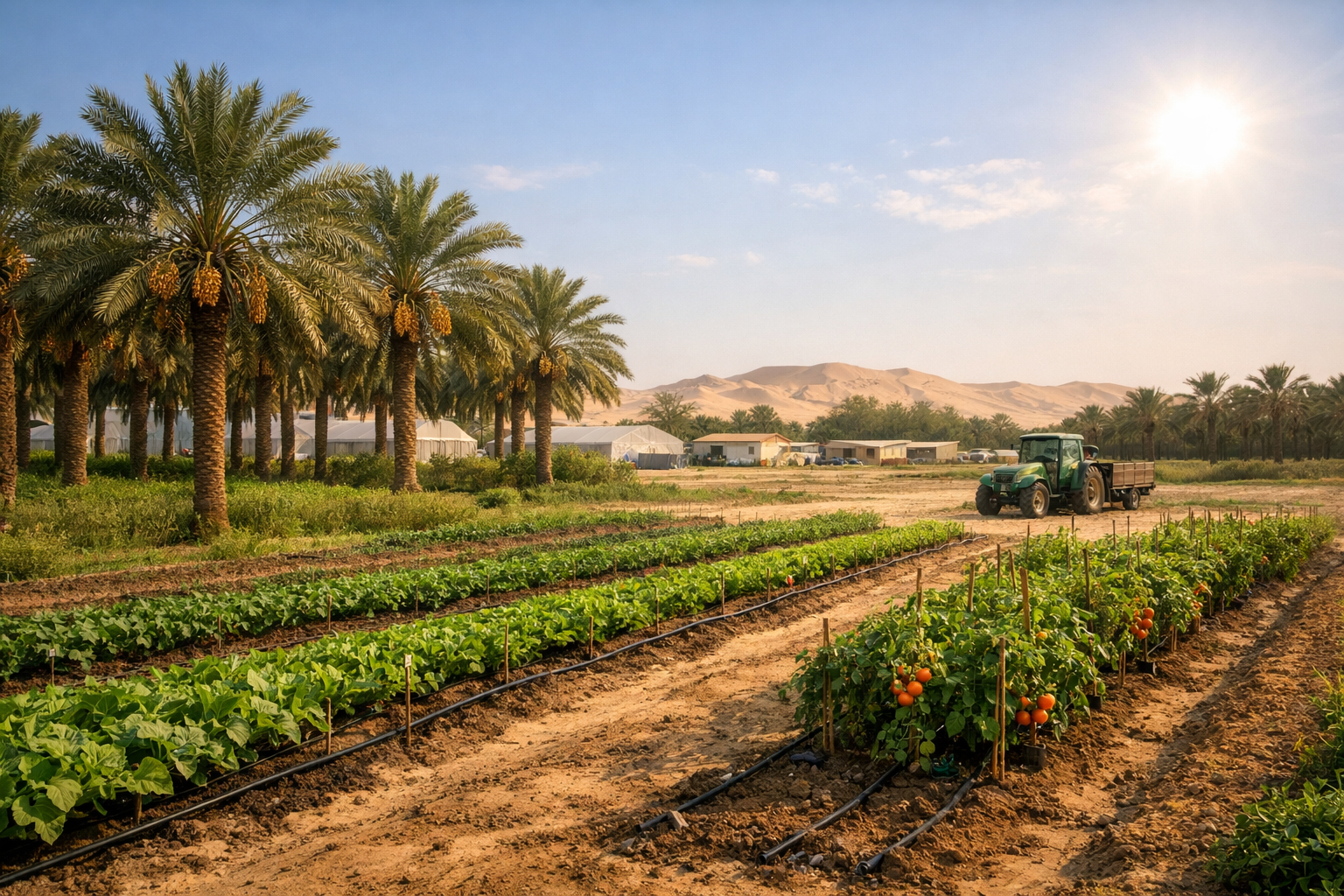
Kuwait’s agricultural sector operates within a hyper-arid desert environment characterized by extreme temperatures (exceeding 45°C), negligible rainfall (averaging 121 mm annually), and sandy soils with poor nutrient and water retention. Despite these constraints, the nation is pursuing a strategic shift toward “protected agriculture” and high-tech facility farming to enhance food security, a core pillar of Kuwait Vision 2035.
Your passion for food is the most important ingredient, but it needs a good plan to grow into a successful business. This means you have to be resourceful and focus your spending where it matters most. You can avoid many of the traditional startup costs by starting small, perhaps from your home kitchen or a local market. This approach lets you test your ideas and build a customer base without taking big financial risks. It is about making progress one step at a time.
Current agricultural developments include
Technological Integration The adoption of Chinese-manufactured automated greenhouse cooling systems and “Dryponics” vertical farming technology is enabling the cultivation of crops previously deemed impossible, such as bananas and high-quality leafy greens.
Water Resource Management With natural freshwater limited to strategic reserves, the sector relies heavily on non-conventional sources, specifically brackish groundwater (45.5% of total withdrawal) and treated sewage effluent (TSE), with a growing emphasis on Advanced Reverse Osmosis (RO) treated wastewater.
Production Milestones Local farmers have successfully produced commercial quantities of citrus, strawberries, and bananas, significantly reducing reliance on expensive imports and shortening supply chains through a “Farm to Fork” model.
Economic Structure While agriculture contributes nearly 0% to the nominal GDP and relies almost entirely on expatriate labor (99%), it is viewed as a critical strategic sector for national resilience against global supply chain disruptions.
Geographic and Environment
Kuwait’s total land area is 17,820 km², of which only approximately 0.4% is cultivated. Most of the land consists of desert plains with sandy soils (80–90% sand) that possess very low organic matter. Hard pans (locally known as “gutch”) often restrict water permeability.
Primary Agricultural Zones
Agricultural activities are concentrated in three distinct regions
Al Wafra (South): Features approximately 1,495 farms over 10,000 ha. This area faces challenges with waterlogging due to impervious soil layers.
Al Abdali (North): Contains an estimated 810 farms over 20,000 ha.
Al Sulaibiya (Center): Characterized by superior soil quality—deep, sandy, and free of salt or hard pans. It hosts approximately 68 productive farms, including specialized cattle and poultry facilities.
Water Sources and Distribution
Kuwait is one of the world’s most water-stressed nations, with a dependency ratio of 100% on external or non-conventional sources.
Water Resource Categories
The following table outlines the water sources utilized for various sectors, based on 2002 data:
| Source | Annual Volume (Million m³) | Primary Use |
|---|---|---|
| Desalinated Water | 420.2 | Potable supply; some high-value cash crops |
| Brackish Groundwater | 415.0 | Productive agriculture (300m³); livestock; landscape |
| Treated Wastewater | 78.0 | Fodder crops; date palms; landscaping |
| Total Withdrawal | 913.2 | — |
Challenges in Water Management
Overdrafting Freshwater and brackish groundwater extraction rates far exceed natural recharge. Continued heavy extraction led to a 200-meter decline in groundwater levels by the year 2000.
Salinization The use of saline water (3,000 to 8,000 ppm) in arid conditions has led to the progressive salinization of approximately 4,080 ha of farmland.
Cost Factors Thermal desalination (Multi-Stage Flash evaporation) is energy-intensive, with fuel consumption accounting for nearly 50% of the water unit cost.
Wastewater Treatment Infrastructure
The Al Sulaibiya plant is one of the world’s largest and most advanced Reverse Osmosis (RO) wastewater facilities, designed to produce 425,000 m³/day. This high-quality effluent is critical for expanding irrigation without further depleting aquifers.
Farming Technology and Protected Agriculture
To overcome the 50°C summer peaks, Kuwait has transitioned to modern facility agriculture.
Greenhouse and Cooling Systems
Farmers utilize automated greenhouse systems, largely imported from China, to maintain internal temperatures below 30°C.
Equipment Technologies include steel frames, plastic roofing, automated water-cooling systems, circulating fans, and electric tricycles/tractors for farm logistics.
Drip Irrigation Localized irrigation was introduced in 1979 to maximize water efficiency in greenhouses and open fields.
Vertical Farming
In 2019, Kuwait launched the Middle East’s first large-scale indoor vertical farm.
Technology Uses “Dryponics” to grow 250 varieties of greens and herbs.
Efficiency The 3,000 m² facility consumes 90% less water, 60% less fertilizer, and zero pesticides compared to traditional methods.
Output Capable of producing up to 550 kg of produce daily
Crop Analysis: Fruits, Berries, Vegetables, and Herbs
Agricultural production is diversifying as controlled-environment technology becomes more accessible to local investors.
Fruits
Fruit trees occupy a significant portion of Kuwait’s permanent crop area.
Date Palms: The most significant fruit crop, occupying 20% of cultivated land (approx. 1,589 ha). They are treated as “guardians of tradition” but require systematic pruning and pest control (targeting palm weevils and scale insects).
Bananas: A major breakthrough occurred in 2025 with the first commercial batch of locally grown bananas. Production has expanded from eight experimental trees to over 20,000. Local bananas are sold at 0.3 KWD/kg, half the price of imported varieties (0.6 KWD/kg).
Other Varieties: Climate-controlled greenhouses now produce citrus, figs, grapes, guavas, pomegranates, mangoes, peaches, apples, and papayas.
Berries
Strawberries: Successful cultivation has been reported in agricultural complexes across both northern and southern Kuwait, supported by government subsidies for climate-controlled facilities.
Vegetables
Vegetables represent the largest share of harvested land (45%).
Herbs
Tomatoes: The primary vegetable crop; case studies focus on the cost-efficiency of uncooled plastic tunnel systems for their production.
Leafy Greens: Historically imported from Europe, local production now includes a wide array of salads, cresses, and greens through automated vertical farms.
Other Staples: Significant production of potatoes, eggplants, cucumbers, and sweet peppers.
Basil Leaves: The market is witnessing steady growth due to health awareness and culinary trends.
- Varieties: Increasing demand for specialty types like Thai and purple basil.
- End Uses: Utilized in essential oils, pharmaceuticals, and food processing (e.g., pesto).
- Challenges: Arid climate limits large-scale outdoor growth, necessitating a reliance on imports or high-tech indoor farming to maintain quality and shelf life.
Distribution and Market Dynamics
The Kuwaiti agricultural model is shifting toward a Farm to Table strategy to ensure maximum freshness and nutritional value.
Speed to Market: High-tech partnerships (e.g., Kuwait Agro and &ever) enable produce to move from the farm to retail shelves within two hours.
Retail Presence: Locally grown, pesticide-free produce is distributed through major outlets, including The Sultan Center, Lulu Hypermarkets, Carrefour, and over 30 local cooperatives.
Price Competitiveness: Local production is successfully undercutting the price of air-freighted imports while offering a longer shelf life due to the elimination of long-distance transport and chlorine washing.
Institutional Support
The Public Authority for Agricultural Affairs and Fish Resources (PAAFR) manages economic development and food security. Financial support is funneled through the Industrial Bank of Kuwait (IBK), which provides soft loans for agricultural investment. Support also includes subsidized water, electricity, and land for qualified greenhouse operators.
Sources:
- Food and Agriculture Organization of the United Nations (FAO). (2008). AQUASTAT Country Profile – Kuwait. Rome, Italy.
- CABI Digital Library. (2016, September 28). Potential of protected agriculture to enhance water and food security in the Arabian Peninsula.
- CABI Digital Library. (2009, October 28). Cost of cultivation of tomato in Kuwait in uncooled plastic tunnel system – a case study.
- Sumit Sagar, 6Wresearch. (2022, August). Kuwait Basil Leaves Market (2022-2031) | Outlook Growth & Revenue. (Updated August 2025). Product Code: ETC219222.
- International Trade Administration, U.S. Department of Commerce. (2021, September 25). Kuwait Agriculture. Prepared by Rasha Al-Muhtaseb.
- Xinhua. (2025, November 5). Chinese technology and equipment help Kuwaiti farmer turn desert into thriving agricultural haven. Editor: huaxia. Photography by Asad and Liu Lei.
- Arab Times. (2025, December 23). Kuwaiti farmers successful in growing fruit variety under controlled environs. Quoting farmer Faleh Al-Shehri.
- Daleeeel.com. (2021, May 10). Kuwait Agro partners with &Ever to exclusively distribute &Ever Kuwait fresh greens and herbs.
- Food and Agriculture Organization of the United Nations (FAO). (2026). Kuwait | Family Farming Knowledge Platform. Text provided by national authorities.
- Plant and Pot Co. (2026). Date Palms: Guardians of Tradition in Kuwait’s Agriculture – A Comprehensive Guide.