
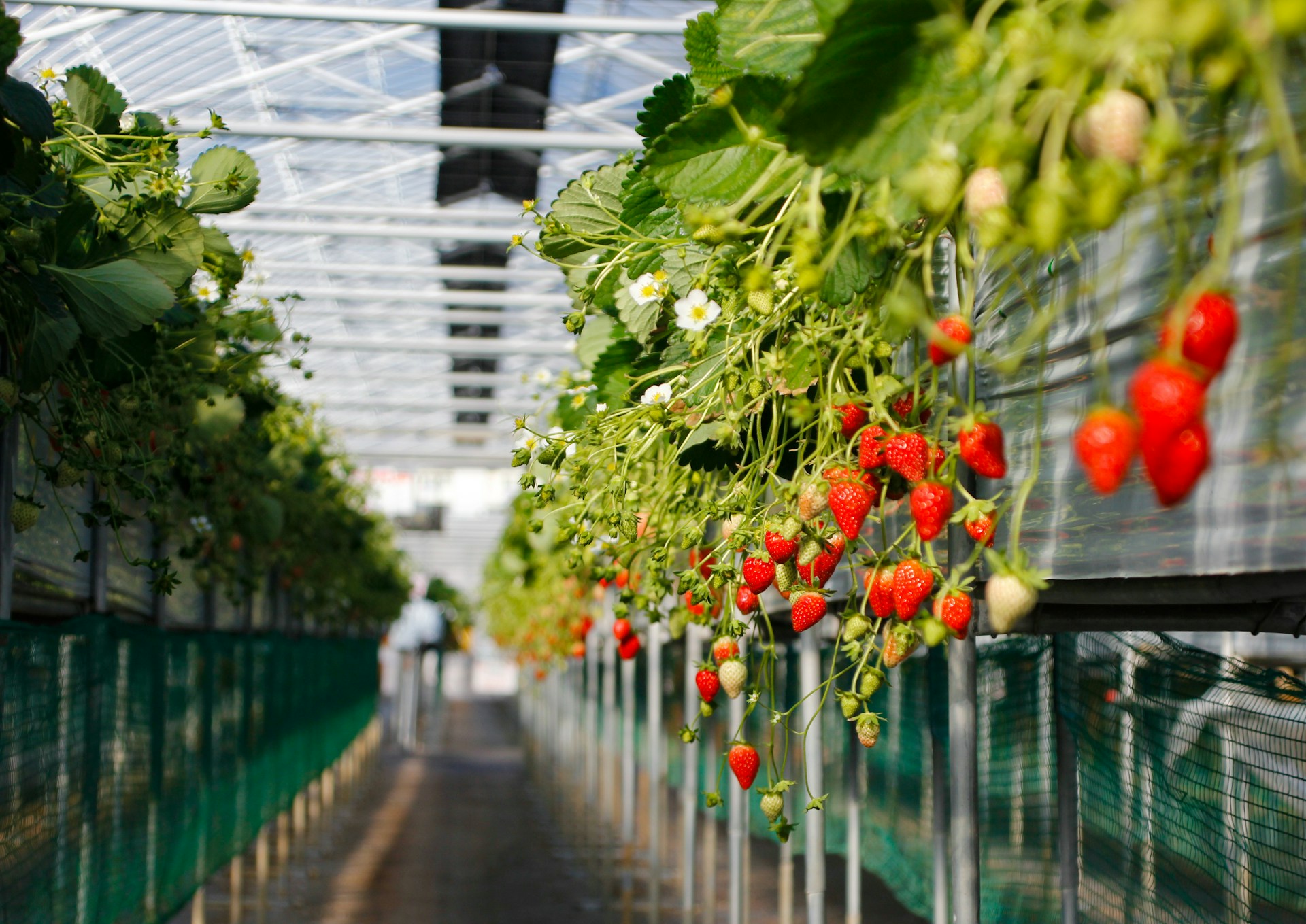
Vertical farming—a subset of Controlled Environment Agriculture (CEA)—is emerging as a critical solution to the converging global crises of population growth, urban migration, and the rapid loss of arable land. By 2050, the global population is expected to reach 9.7 billion, requiring a 70% increase in food production. Simultaneously, the world has lost one-third of its arable land over the last 40 years. Vertical farming addresses these challenges by growing produce in 3D-stacked layers within climate-controlled environments, achieving land-use efficiencies up to 500 times greater than traditional agriculture.
While current operations are primarily limited to high-value leafy greens and herbs due to high energy costs and lighting requirements, the industry is leveraging automation, artificial intelligence (AI), and advanced LED technology to drive down costs. The primary value proposition lies in the ability to produce food 365 days a year, localized to urban centers, using 90–99% less water and land than conventional farming, while eliminating the need for pesticides.
The Global Food Imperative
The shift toward vertical farming is driven by several macro-environmental factors that threaten traditional agricultural stability:
- Population and Urbanization: 68% of the world’s population is projected to live in urban centers by 2050. Vertical farming allows food to be grown where people live, reducing the average 1,500-mile transport distance from farm to market.
- Land Degradation: Erosion and pollution have significantly depleted arable land. Per capita, arable land is expected to drop 66% by 2050 compared to 1970 levels.
- Water Scarcity: Agriculture consumes approximately 70% of the global freshwater supply. Vertical farming’s closed-loop systems offer a drastic reduction in water usage.
- Nutritional Integrity: Produce begins losing nutritional value (up to 50% of Vitamin C in a week) immediately upon harvest. Localized vertical farms ensure fresher, more nutrient-dense food reaches consumers faster.
Controlled Environment Agriculture (CEA) Methodologies
Vertical farming replaces the variables of nature with precise mechanical and digital controls. The primary systems used include:
Cultivation Techniques
| Method | Description |
| Hydroponics | Growing plants in liquid or solid materials (like peat moss or sponges) to deliver a nutrient mix directly to roots without soil. |
| Aeroponics | A soil-less method where roots are suspended and misted directly with a nutrient-rich solution; this method originated from NASA research. |
| Aquaponics | A symbiotic system combining hydroponics with aquaculture (raising fish), though less common in pure vertical setups. |
Environmental Controls
- LED Lighting: Because natural sunlight introduces climate variability and heat fluctuations, many advanced farms use 100% LED lighting. These systems often utilize a “pink light” spectrum—a mix of red and blue LEDs—to maximize photosynthesis efficiency while minimizing energy costs associated with unused light wavelengths (like green).
- Atmospheric Management: In sealed environments, plants rapidly deplete CO2. High-scale facilities must supplement CO2; for example, a single facility may consume nearly 30 tons of CO2 per month to maintain growth.
- Airflow and HVAC: Uniformity is critical. Systems use “walls of air”—similar to air hockey tables—to ensure consistent temperature and CO2 distribution across all levels of the growing racks.
- Resource Recapture: Advanced facilities recycle up to 95% of their water and recapture heat generated by LEDs to assist in climate regulation.
Operational Advantages and Scaling Efficiency
Vertical farming demonstrates massive gains in output per square foot compared to traditional methods.
- Land Efficiency: A 0.5-acre vertical farm can produce as much food as a 250-acre traditional farm, representing a 500x increase in land-use efficiency.
- Yield Consistency: Controlled environments allow for year-round harvesting without seasonal interruptions, ensuring a consistent supply of high-quality, pesticide-free produce.
- Automation and Robotics: Industry leaders are using AI to manage water, temperature, and light settings. Robotic arms and automated tracks for tray movement reduce labor costs significantly—by up to 50% in some profitable operations.
- Logistics and Tracking: Modern facilities use RFID tags to track tens of thousands of individual trays throughout the seeding, germination, and growing cycles.
Technical and Economic Barriers
Despite its potential, vertical farming faces significant hurdles to widespread adoption:
- High Energy Consumption: Lighting is the single largest operating cost. A large-scale facility can require 1.5 megawatts of power. To remain sustainable and cost-effective, farms must increasingly source energy from renewables or cooperate with the power grid to reduce load during peak demand.
- Crop Limitations: The industry is currently restricted to “salad greens”—leafy vegetables, herbs, and microgreens—because they grow fast, remain lightweight, and have high market value. Caloric staples like wheat, corn, and rice are currently not economically viable in vertical systems due to the space and energy required.
- High Capital Expenditure: The technology required for automation, HVAC, and water filtration involves substantial upfront investment.
Profiles in Industry Innovation
Several companies are defining the current landscape of vertical farming through different strategic approaches:
- Spread (Japan): One of the first companies to achieve profitability. They produce 30,000 heads of lettuce daily and have successfully lowered consumer prices through heavy automation.
- Plenty (USA): Utilizes massive columns of produce hung from ceilings and tuned LEDs to mimic the full spectrum of the sun. They have secured over $400 million in investment from high-profile backers.
- Vertical Harvest (USA): Focuses on “spinning” trays and integrated social missions, such as employing individuals with disabilities (comprising 40% of their workforce). Their facilities are designed as biomechanical loops that deliver millions of pounds of produce directly to local communities.
- Freight Farms / Square Roots: Focuses on modularity by converting shipping containers into scalable vertical farming pods. This allows for rapid deployment in urban centers and empowers younger generations of farmers.
Vertical farming is not a replacement for traditional agriculture but a necessary supplement for an urbanized, resource-constrained future. Its ability to produce massive volumes of food on a negligible footprint makes it an essential tool for food security. As technology improves—specifically in LED efficiency and AI-driven automation—the cost of production is expected to continue falling, potentially expanding the variety of crops that can be grown sustainably in these “science fiction” environments.
References
- Is Vertical Farming the High Tech Future of Food? – Undecided with Matt Ferrell
- Why This Vertical Farm is 500x More Efficient Than Farming – Undecided with Matt Ferrell